Fit the lift to the building
- Measure the top task and add working clearance to select platform height.
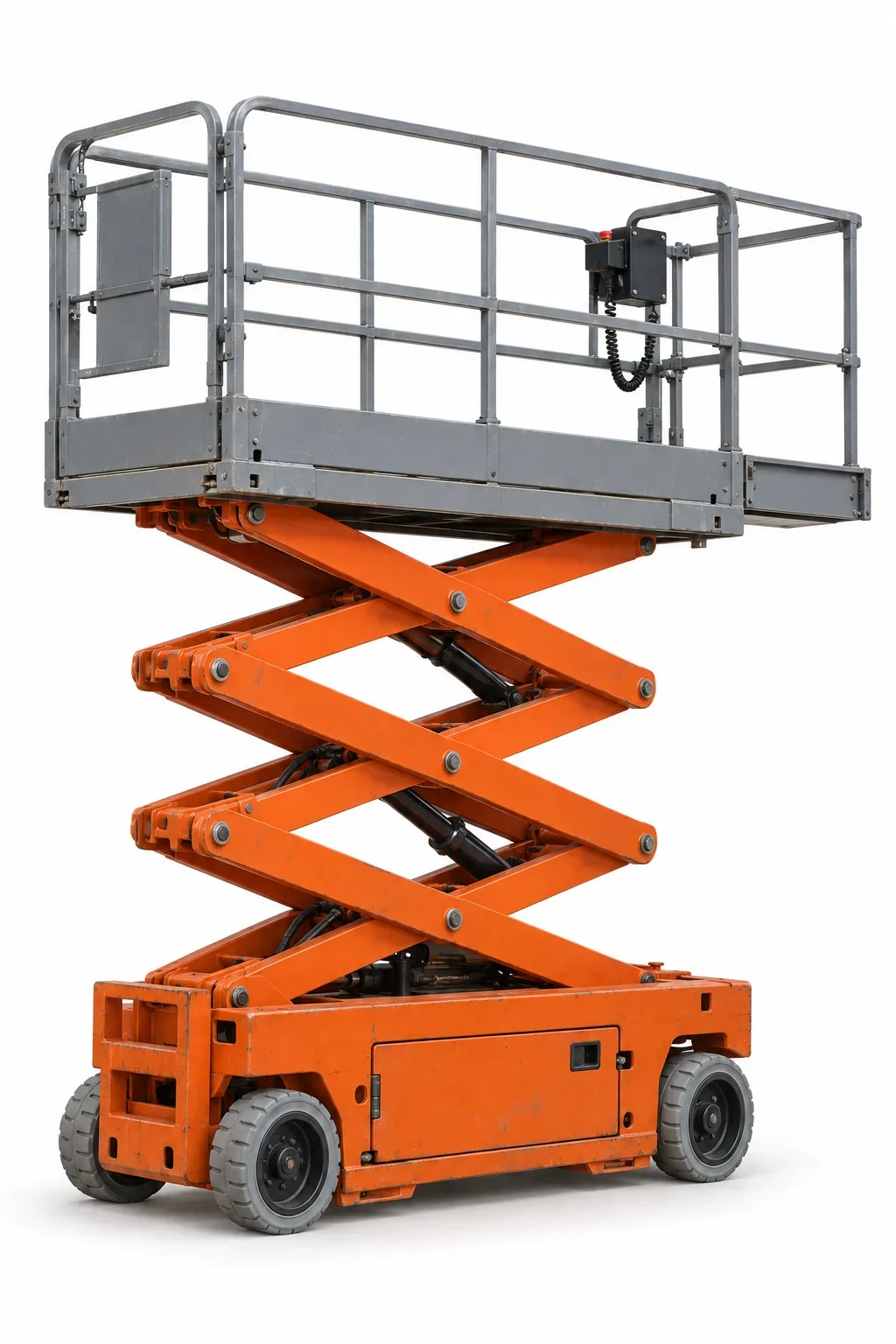
- Check aisle widths, doorway widths, and elevator capacity. Many compact scissor lifts pass standard double doors; taller units may require loading docks and wider corridors.
- Confirm slab condition and floor loading where the lift will turn or stage.
Why Mobile’s conditions favor electric slab units
Local distribution buildings and climate‑controlled industrial sites minimize corrosion compared to outdoor yards. Electric scissor lifts reduce exhaust and noise, which suits indoor maintenance, inventory work, and tenant improvement tasks that run during business hours or night shifts.
Battery and charging considerations
Plan overnight charging near dry, ventilated areas. Humid, salt‑heavy air can affect connectors over time, so units maintained with clean terminals and sealed electrics tend to perform more consistently across longer rentals.
Typical applications
- Lighting, fire protection, and duct service in high‑bay interiors
- Racking adjustments and cycle counts on smooth floors
- Signage, low‑voltage, and finish trades in occupied spaces
When electric scissor is not ideal
If the surface includes wet thresholds, gravel, or unfinished grades en route to the work, a rough‑terrain model may be more reliable. Review outdoor options at /rough-terrain-scissor-lift-rental/. If the work sits behind obstacles, see boom alternatives at /aerial-lift-rental/.
Quick sizing cues
- Short tasks below common ceiling heights: ultra‑compact units with narrow widths
- Mid‑bay maintenance: standard slab lifts balancing height and footprint
- High‑bay interiors: taller electrics where freight elevator or dock access exists
Actual conditions, the selected unit’s instructions, and site procedures govern elevated work at all times.