Map the access and conflict points first
- Where do delivery trucks, forklifts, and aerial lifts enter and exit during peak hours?
- Are there pinch points near overhead work where barricades must stand back from lift arcs?
- Do emergency egress routes cross the temporary perimeter?
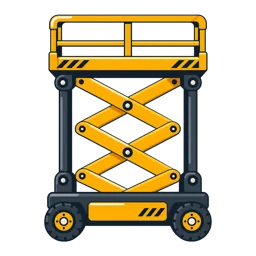
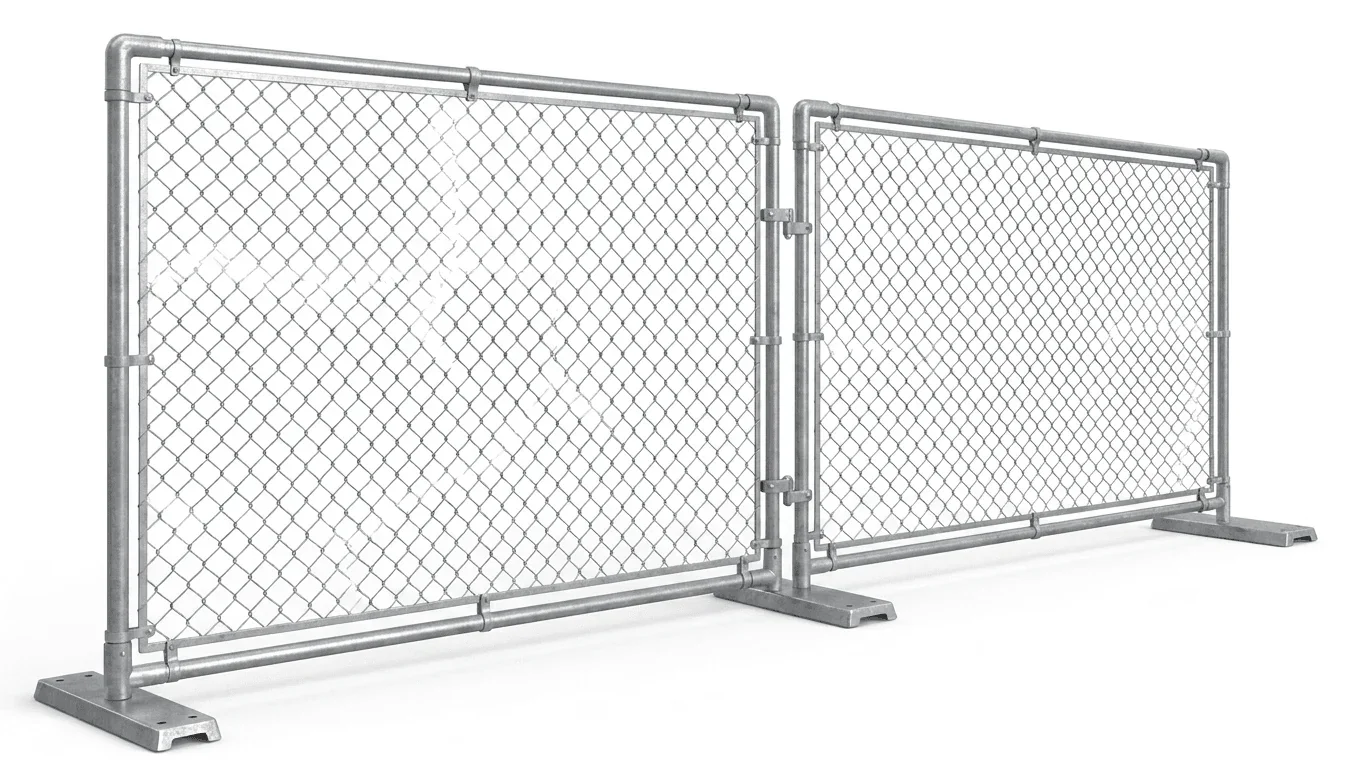
In busy logistics yards and interior build-outs, fencing that skirts high-traffic lanes reduces impacts on schedule-critical moves. Barricades in high-bay interiors should allow enough offset for scissor or boom lift swing radii. See /aerial-lift-rental/ and /boom-lift-rental/ when overhead work shares the same zone.
Surface and weather
Mobile’s frequent rain saturates soils and creates pooling that can undermine bases. On gravel or turf, wider footings and thoughtful site-stability factors planning counter soft spots. On concrete or asphalt, panel stability improves with straight runs and bracing at corners, especially where wind funnels between buildings.
Coastal exposure and maintenance
Salt-laden air increases wear on connectors, clamps, and fasteners. Over multi-week projects, hardware that resists corrosion maintains alignment and reduces unplanned adjustments after storms. Visibility markings may also fade faster in this climate and should be checked during routine site walk-throughs.
Working near elevated tasks
- Indoor slab projects using /electric-scissor-lift-rental/ benefit from barricades that define lift lanes without blocking charging or staging.
- Mixed-surface exterior work may bring in /rough-terrain-scissor-lift-rental/ units; keep fencing offsets large enough to avoid tire contact on turns.
- Articulated outreach zones change as the lift rotates. When planning barricade stand-off, consider /articulating-boom-lift-rental/ and /telescopic-boom-lift-rental/ geometries.
Actual conditions, the selected unit’s instructions, and site procedures govern clearances and layouts, particularly during tropical weather shifts.