Site and weather drive the selection
- Walk the route: unfinished pads, aggregate, and soft shoulders near drainage can limit smaller tires.
- Consider daily exposure: repeated rain and spray increase the value of protected harness points, sealed electrics, and fresh service intervals.
- Check staging room for delivery and refueling where allowed by site policy.
Mobile‑specific factors
Outdoor work near the bay and logistics parks often mixes wet ground and salt in the air. Units with robust coatings and well‑maintained hydraulic fittings hold up better across multi‑week assignments. When showers pass through, deck traction and water‑resistant controls help crews resume work when site procedures allow.
Sizing and configuration
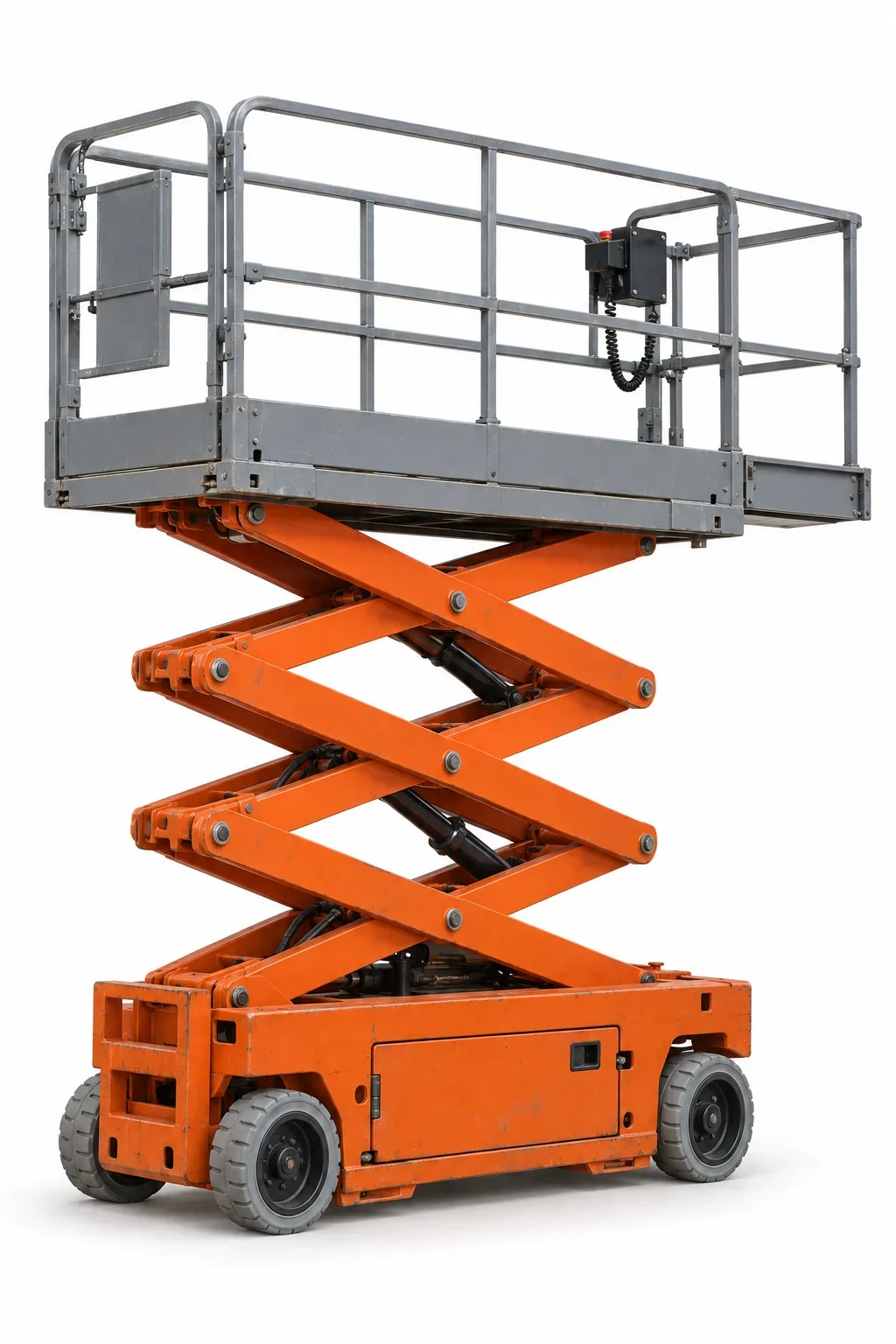
- Mid‑height exterior work: standard rough‑terrain platforms with moderate footprints
- Higher exterior tasks: taller rough‑terrain models with wider stance for stability
- Deck extensions: useful where the base can sit near the task but needs a modest horizontal reach
Typical applications
- Exterior punch lists on new builds before paving
- Port‑adjacent facility maintenance between weather windows
- Service on facades, canopies, and signage where slab access isn’t available
If obstacles block straight‑up access or the task sits behind overhangs, review boom alternatives at /boom-lift-rental/ or /aerial-lift-rental/.
Actual conditions, the selected unit’s instructions, and site procedures govern any exterior or elevated work.