Compare by task position and surface
- Work directly overhead on flat slab: /electric-scissor-lift-rental/ offers compact platforms for aisle work.
- Work off-center or over obstacles indoors: /vertical-mast-lift-rental/ fits tight passages with small footprints.
- Uneven ground or exterior approach: /rough-terrain-scissor-lift-rental/ provides larger decks for crews in yard conditions.
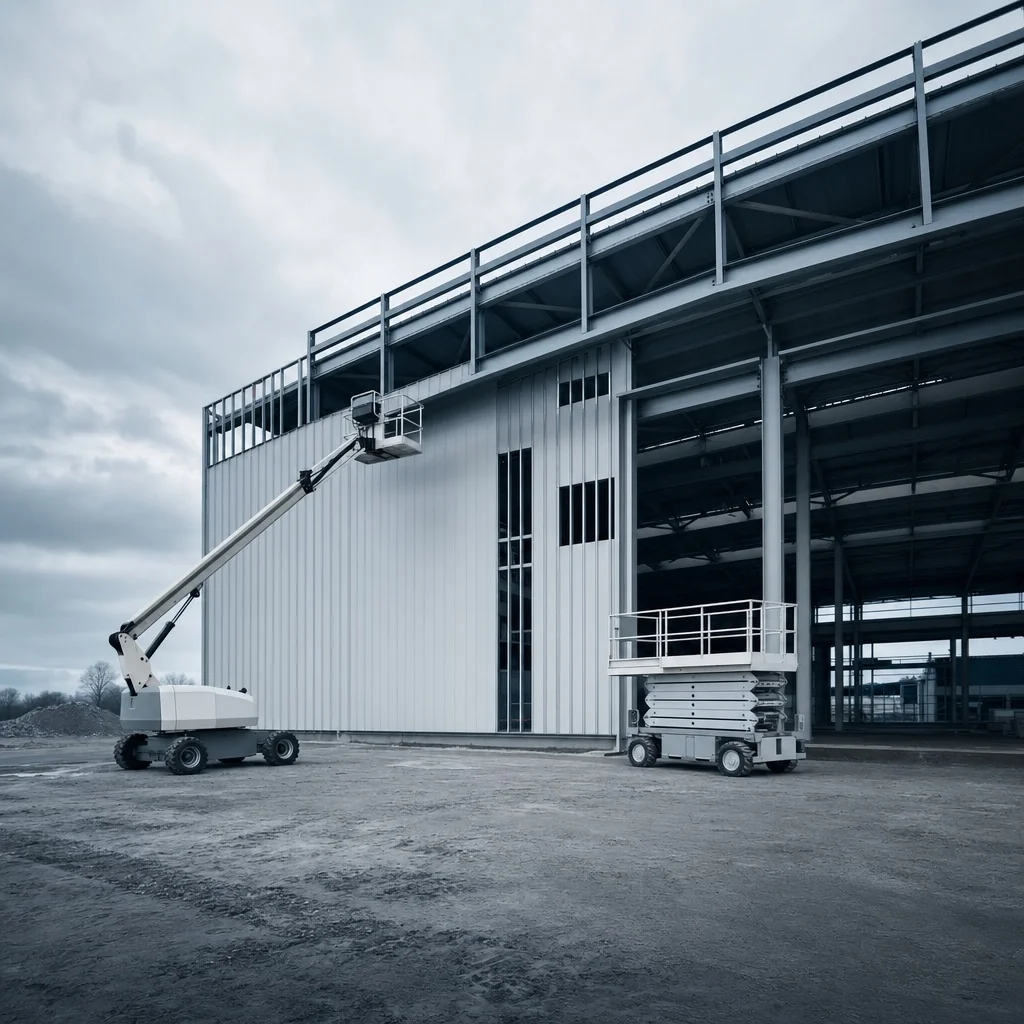
- Outreach around obstacles or higher elevations: /boom-lift-rental/ is the starting point; refine by /articulating-boom-lift-rental/ for up-and-over geometry or /telescopic-boom-lift-rental/ for straight reach.
- Material handling around docks and interiors: /forklift-rental/ and /telehandler-rental/ bridge the distance between trucks and work zones.
Coastal and weather factors in Mobile
Salt air and high humidity increase corrosion pressure on platforms, fasteners, and connectors, particularly for long stays near open-air yards. Frequent heavy rain shifts preferences: slab lifts under roof for uninterrupted interior schedules, and rough-terrain models outside with enough clearance to navigate soft spots and drainage paths. When schedules extend overnight, support equipment matters: - Power and lighting: /generators-light-towers-rental/ - Secure storage near active docks or assembly areas: /storage-containers-rental/ - Perimeter and pedestrian control around lift lanes: /temporary-fencing-barricades-rental/
Route and placement constraints
- Door and gate width: confirm whether machines can pass without removing hardware.
- Floor loading and ground bearing: high-bay interiors differ from yard surfaces after storms; saturated soils change placement options.
- Overhead and lateral obstacles: conveyors, piping, and stacked inventory drive whether a platform can sit directly under the task or needs outreach.
Actual conditions, the selected unit’s instructions, and site procedures govern work at height and exterior placements, especially during tropical weather.